Quick Answer
After a windshield replacement, most drivers can safely drive away 30 minutes to a few hours later. The exact number is called the safe drive-away time, or SDAT, and it depends on the adhesive your installer used, the outside temperature and the humidity. In a Connecticut, Rhode Island or Massachusetts winter, cold and dry air slows curing, so ask your installer for the SDAT before the work starts and again when it is finished.
Key Takeaways
- Safe drive-away time is the minimum wait before the adhesive is strong enough to hold the windshield in a crash.
- Your windshield helps your passenger airbag deploy correctly and keeps occupants inside the vehicle, so the bond matters as much as the glass.
- Cold temperatures and low humidity, both common in New England from November through March, can stretch cure times.
- The national auto glass safety standard requires installers to tell you the SDAT before and after the installation.
- For the first day or two, skip the car wash, leave the retention tape alone and avoid slamming doors.
What Is Safe Drive-Away Time?
Safe drive-away time is the minimum time a vehicle must sit after a windshield installation before the urethane adhesive can hold the glass in place during a collision. A windshield is not bolted or clipped into the frame. A bead of urethane bonds it, starting soft and gaining strength as it cures.
SDAT is not the same as a full cure. A urethane that reaches its drive-away strength in one hour may keep strengthening for days. SDAT simply marks the point where the bond meets federal crash requirements, which is why it is the number that decides when you can safely get back on I-91, Route 9 or the Mass Pike.
Why Does a New Windshield Need Time to Cure?
Your windshield is a structural safety part. Federal Motor Vehicle Safety Standard 212, the windshield-mounting standard, keeps the windshield in place during a crash to help reduce injuries and fatalities. Three jobs depend on a fully bonded windshield:
- Airbag support. In many vehicles, the passenger airbag inflates upward and deflects off the windshield toward the passenger. A weak bond can let the glass push out, and the airbag loses the surface it needs.
- Occupant retention. A properly bonded windshield helps keep people inside the vehicle in a frontal crash.
- Roof support. In a rollover, the bonded windshield helps the roof resist crushing.
Adhesive manufacturers test their products against these crash standards and publish a drive-away time for each one. For example, Henkel rates its TEROSON BOND 120 windshield adhesive at a two-hour drive-away time with airbags, while some faster products are rated at 60 minutes. Different products, different clocks.
How Does Cold Weather Change Drive-Away Time in New England?
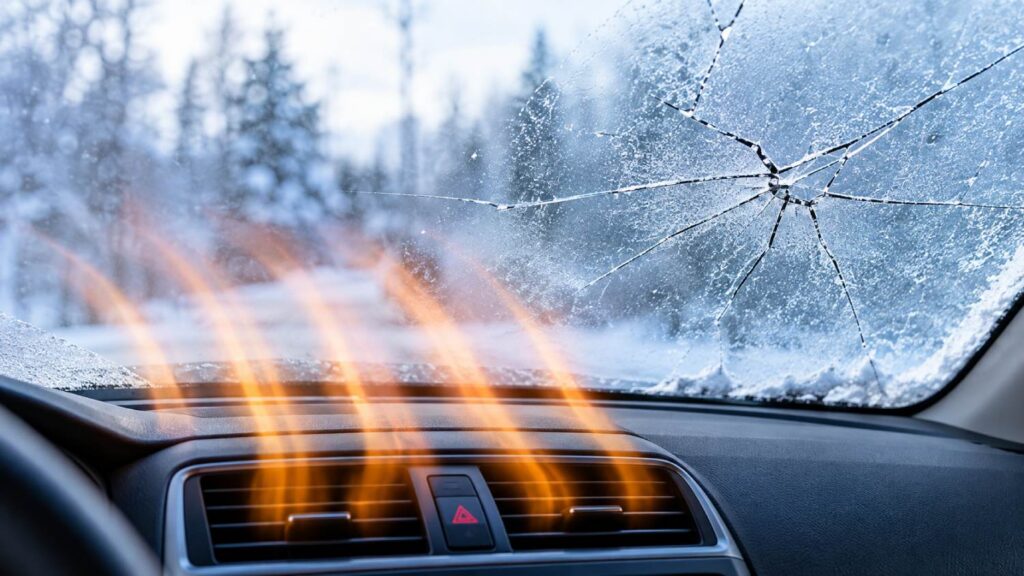
Most windshield urethanes cure by pulling moisture from the air. Cold air holds less moisture, and chemical reactions slow down as temperatures drop. Patent filings for windshield adhesives describe the same problem: low temperatures and low humidity slow hardening and push back the time before the vehicle can be used.
New England drivers feel this every winter. A January morning in Waterbury or Worcester can sit in the teens, and the air indoors and out is dry. The fix is not guessing. Installers working in cold climates choose cold-rated urethanes and adjust the wait to the conditions. CRL rates its Essex U208HV Betaseal Express urethane for a one-hour drive-away time at temperatures as low as 0°F, which shows what the right product can do in the right hands.
| Factor | How it affects drive-away time |
|---|---|
| Adhesive type | Fast-cure urethanes can cure in 30 to 60 minutes; standard products often take several hours. |
| Temperature | Colder air slows the cure unless the product is rated for low temperatures. |
| Humidity | Moisture-cure urethanes cure more slowly in dry winter air. |
| Where the work happens | A heated shop bay provides more consistent conditions than a February driveway. |
| Vehicle features | Some vehicles also need ADAS camera calibration before they are ready to go. |
Mobile service still works well in winter. A trained technician will check the temperature, use a product rated for it and tell you honestly if the conditions call for an in-shop appointment instead.
Who Is Supposed to Tell You the Safe Drive-Away Time?
Your installer is. The Auto Glass Safety Council maintains the ANSI/AGSC/AGRSS standard, the only auto glass replacement safety standard in North America. A revision covered in AGRR Magazine changed the rule so that the vehicle owner must be told the minimum safe drive-away time both before and after the installation. Earlier versions didn’t specify when, and customers often learned the number only after the work was done.
Knowing the SDAT up front lets you plan. If the wait is two hours, you can schedule the appointment around school pickup or a shift change instead of feeling pressure to leave early.
What Should You Avoid for the First 24 to 48 Hours?
Once you are cleared to drive, the bond is safe but still gaining strength. A few habits help it finish curing cleanly:
- Skip automatic and high-pressure car washes for at least a day or two.
- Leave the retention tape on until your installer says it can come off.
- Close doors gently, or leave a window slightly cracked, so cabin air pressure doesn’t push on the fresh seal.
- Take it easy on frost heaves and potholes where you can.
- Watch for dash warning lights. If your car has a forward camera behind the glass, check any lane-keeping or collision-warning messages right away.
Questions to Ask Before You Book
- Which urethane will you use, and what is its safe drive-away time at today’s temperature?
- Will the work happen in a heated bay or outdoors?
- Does my vehicle need ADAS calibration, and can you do it the same day?
- What should I avoid after the appointment, and for how long?
How Payless Auto Glass Handles Drive-Away Time
Payless Auto Glass is a family-owned auto glass repair, replacement and ADAS calibration company that has served New England drivers since 1987. With shops in Hartford, Hamden, Norwich and Waterbury, Connecticut, and Springfield, Easthampton and Auburn, Massachusetts, plus mobile service across Connecticut, Rhode Island and Western and Central Massachusetts, our technicians install windshields through every kind of New England weather.
We tell every customer the safe drive-away time before we start and confirm it when we finish. When a winter mobile job calls for a heated bay, we say so. Payless Auto Glass has been named one of AGRR Magazine’s Top Retailers three years in a row, from 2024 through 2026. To schedule a replacement or ask about drive-away time for your vehicle, call 877-776-4527 or request a quote at paylessautoglass.com.
Frequently Asked Questions
Can I drive immediately after a windshield replacement?
No. Wait for the safe drive-away time your installer gives you. Driving sooner risks the windshield separating in a crash, which can affect airbag performance and occupant protection.
How long does windshield urethane take to fully cure?
Drive-away strength can arrive in under an hour with fast-cure products, but full cure takes longer and varies by product and weather. Follow your installer’s care instructions for the first day or two.
Is it safe to replace a windshield in freezing weather?
Yes, when the installer uses a urethane rated for the temperature and adjusts the drive-away time. Some winter jobs are better done in a heated shop than in a driveway.
Can I go through a car wash after a new windshield?
Wait at least 24 to 48 hours, and longer if your installer recommends it. High-pressure water can stress a seal that is still curing.
When can I remove the tape after windshield replacement?
Most installers suggest leaving retention tape on for about a day. Ask your technician for the exact timing for your vehicle.
Does ADAS calibration add to the wait?
It can. Vehicles with a forward-facing camera behind the windshield often need calibration after replacement, which adds time to the appointment. Payless Auto Glass performs ADAS calibration so we can complete the job in one visit.
Resources
- 49 CFR 571.212, Standard No. 212: Windshield Mounting (U.S. Government Publishing Office)
- ANSI/AGSC/AGRSS Automotive Glass Replacement Safety Standard (ANSI Webstore)
- AGRSS Standard Updates: Informing the Customer of SDAT (AGRR Magazine)
- TEROSON BOND 120 Windscreen Adhesive (Henkel)
- CRL Essex U208HV Betaseal Express Urethane (C.R. Laurence)
- Polyurethane Windshield Adhesive Patent 2446922 (Canadian Intellectual Property Office)