A no-nonsense guide for New England drivers who want the job done right
Auto glass repair and replacement seems straightforward enough. Glass breaks, glass gets fixed. But the industry has enough variation in quality, materials, and practices that who you choose matters a great deal — not just for your wallet, but for your safety.
The problem is that most drivers don’t think much about their auto glass provider until they’re standing in a parking lot with a cracked windshield, searching their phone for whoever can get it done quickest. That’s exactly the wrong moment to be evaluating options. A little preparation — knowing what to look for and what red flags to watch out for — can make a significant difference in the quality of the work and your peace of mind.
Here’s a practical framework for making that decision, especially for drivers in New England where vehicle glass takes a beating year-round.
Start With Certification
The first and most important thing to verify is whether the shop’s technicians are certified. The industry’s primary credentialing body is the Auto Glass Safety Council (AGSC), which administers the Auto Glass Technician certification program. Technicians who hold this certification have demonstrated competency in the installation standards outlined in ANSI/AGSC/AGRSS Standard 003 — the national standard for automotive glass replacement safety.
AGSC certification isn’t a guarantee of perfect work, but it is a meaningful baseline. It tells you the technician has been trained in proper adhesive use, cure times, proper glass handling, and the safety-critical nature of the windshield’s role in the vehicle’s structural integrity.
Ask directly: Are your technicians AGSC-certified? A reputable shop will answer without hesitation. If the response is vague or deflective, that’s a signal worth heeding.
OEM vs. OEE Glass: Know the Difference
Not all replacement windshields are the same, and the distinction matters more than many drivers realize.
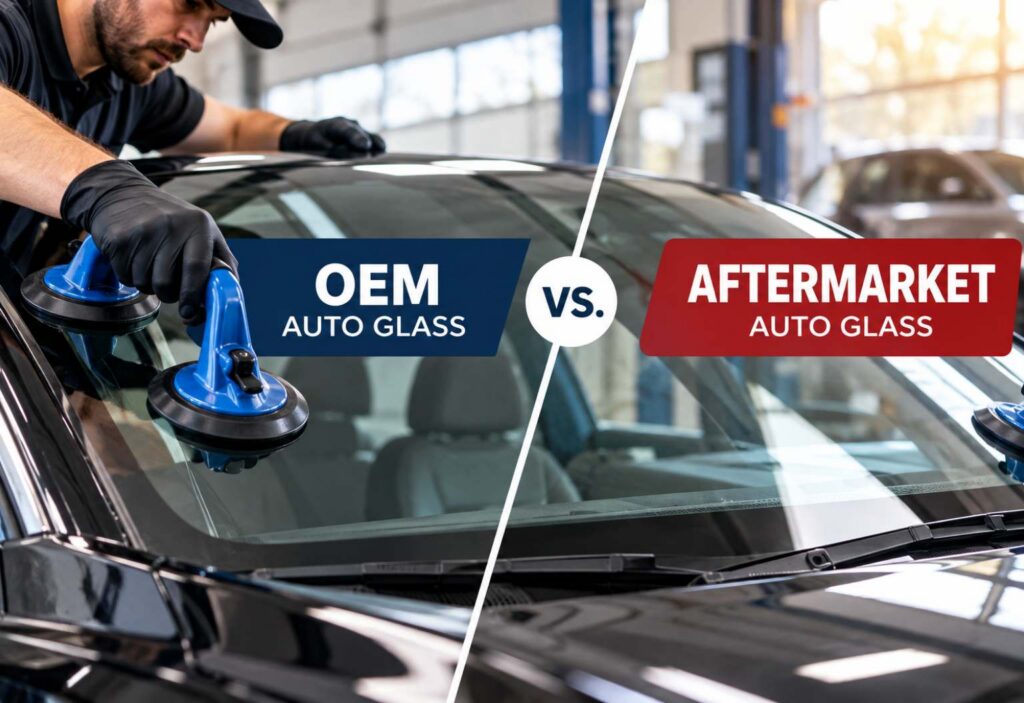
OEM glass (Original Equipment Manufacturer) is manufactured by the same supplier that made the glass that came with your vehicle from the factory. It meets the exact specifications — optical clarity, thickness, curvature, tint, and any acoustic or solar-reflective properties — of the original.
OEE glass (Original Equipment Equivalent) is manufactured by a third party to match OEM specifications. For most vehicles, OEE glass is a perfectly acceptable option that meets all applicable safety standards. The price is typically lower, and the quality gap is often negligible.
Aftermarket glass is a broader category that includes products that may not meet OEM specifications. Quality varies widely. Some aftermarket glass is perfectly fine; some is not.
For most everyday vehicles, OEE glass from a reputable supplier — such as Pilkington, Saint-Gobain, or AGC Automotive — is a reasonable choice. For newer vehicles with ADAS systems, however, OEM glass is strongly preferred. Camera systems calibrated to the specific optical properties of the original glass may not perform correctly with a windshield that has different light transmission or curvature characteristics. The AGSC has published guidance on this issue specifically as ADAS technology has become more prevalent.
Ask your provider what glass they use and who manufactures it. A transparent answer is a good sign.
Adhesive Quality and Cure Time
The adhesive that bonds your windshield to the vehicle frame is as important as the glass itself. Modern windshields use a urethane adhesive that, when properly applied and cured, creates a bond strong enough to support airbag deployment and maintain roof crush resistance.
The critical variable is cure time, which is referred to in the industry as Safe Drive-Away Time (SDAT). Different adhesive formulations have different SDATs depending on temperature and humidity. The AGSC AGRSS Standard 003 requires that technicians calculate and communicate the correct SDAT to the customer before they drive the vehicle.
A shop that tells you your car is ready to drive immediately after installation — regardless of what adhesive they used or what the weather is — is cutting corners. The minimum SDAT for even the fastest-cure adhesives under ideal conditions is typically one hour. In the cold, wet conditions common across New England in fall and winter, it may be considerably longer.
Ask what adhesive they use and what the safe drive-away time will be for your specific job. A shop that can answer specifically is one that takes the process seriously.
ADAS Capability: A Non-Negotiable for Modern Vehicles
As covered in depth in our companion article on ADAS calibration, any vehicle with a forward-facing camera system requires recalibration after windshield replacement. This is not a value-add service — it’s a safety requirement.
When evaluating a provider, confirm that they perform ADAS calibration in-house. Shops that subcontract calibration to a third party introduce delays and a diffusion of responsibility. More concerning are shops that don’t ask about your vehicle’s safety systems at all. If a provider quotes you for a windshield replacement without asking whether your car has ADAS features, they’re not thinking about the full scope of the job.
The National Highway Traffic Safety Administration (NHTSA) has been clear that ADAS systems are safety-critical infrastructure. Any provider that treats recalibration as optional or unnecessary is out of step with current industry and regulatory standards.
Insurance Navigation
A good auto glass provider does more than fix glass — they help you understand and use your insurance coverage. In New England, this is particularly relevant.
Massachusetts drivers, for instance, benefit from state insurance regulations that often allow windshield repair with no out-of-pocket cost under comprehensive coverage. Connecticut, Rhode Island, and Maine have similar frameworks, though the specifics vary. A provider familiar with the New England insurance landscape can often save you money you didn’t know you were entitled to.
Look for a shop that will handle the insurance claim on your behalf, verify your coverage before scheduling the work, and give you a clear picture of what — if anything — you’ll owe. Shops that require full payment upfront before dealing with insurance, or that discourage you from filing a claim, are not operating in your interest.
Mobile Service: Convenience With Caveats
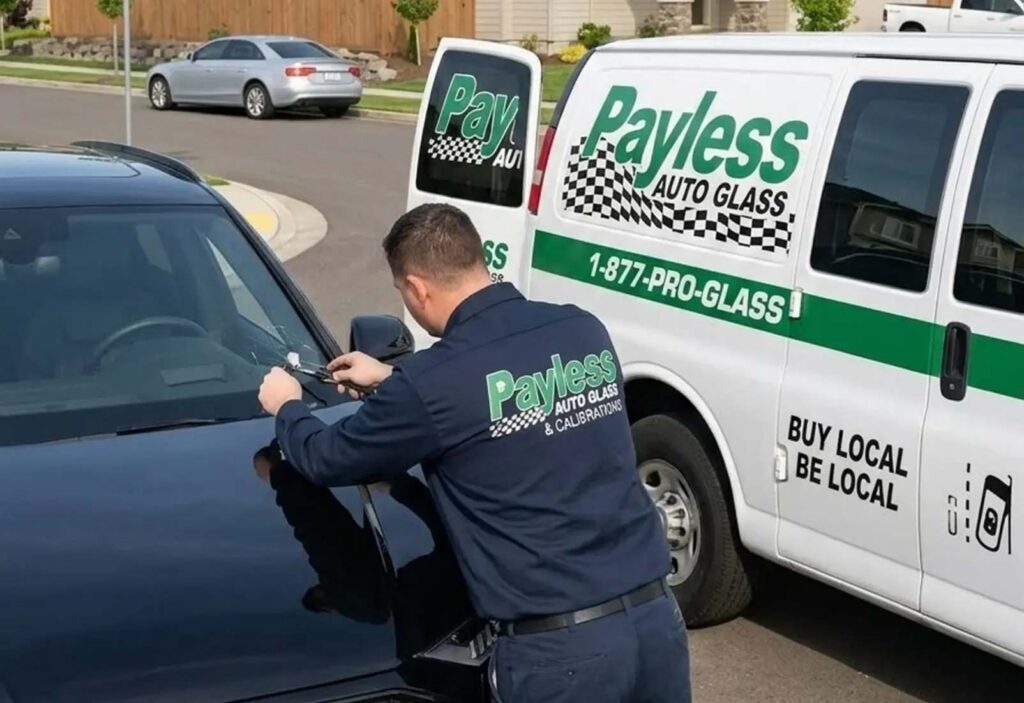
Mobile auto glass service — where a technician comes to your home, workplace, or wherever your car is parked — has become increasingly common, and for good reason. It saves time and eliminates the hassle of dropping off and retrieving your vehicle.
Most mobile service is entirely legitimate and performed to the same standard as in-shop work. The same certified technicians, the same glass, the same adhesives. The main constraints are environmental: mobile replacements should not be performed in rain, in temperatures below about 40°F (for most adhesives), or in conditions where the vehicle can’t remain stationary during the cure window.
A reputable mobile provider will check the weather forecast before scheduling and will reschedule if conditions aren’t appropriate. Be cautious of any provider that promises same-day mobile service regardless of conditions — doing the job in rain or near-freezing temperatures compromises the adhesive bond in ways that may not be immediately obvious.
Red Flags to Watch Out For
There are a few patterns that should give any driver pause when evaluating an auto glass provider:
- Unusually low prices: Significantly below-market pricing often indicates corners being cut — on glass quality, adhesive quality, technician training, or all three. A windshield replacement that costs half of what other reputable shops charge is worth questioning.
- No written estimate or warranty: Any professional shop will provide a written quote and a warranty on both parts and labor. A verbal estimate only, or resistance to putting terms in writing, is a red flag.
- High-pressure same-day tactics: Legitimate urgency around a spreading crack is real, but a shop that pressures you into same-day service without giving you time to verify their credentials or compare options is prioritizing their schedule over your best interests.
- No mention of ADAS: For any post-2015 vehicle, a shop that doesn’t ask about your vehicle’s camera and safety systems before quoting a replacement simply isn’t paying attention to the full job.
- Vague answers about glass sourcing: If a technician can’t tell you the manufacturer of the glass they plan to install, that’s worth pressing on.
About Payless Auto Glass
Payless Auto Glass was built on a straightforward premise: New England drivers deserve quality auto glass work at honest prices, without the runaround. The team is AGSC-trained, uses OEM and OEE glass from reputable manufacturers, and handles ADAS recalibration in-house for vehicles that require it.
From a quick chip repair in Providence to a full windshield replacement with ADAS calibration in Hartford or Boston, Payless Auto Glass brings the same standards to every job. Mobile service is available throughout the region, and the team works directly with all major insurance providers to make the process as smooth as possible for the customer.
When you need auto glass work done right, Payless Auto Glass is ready. Reach out for a free quote and find out why drivers across New England trust us with their vehicles.
Frequently Asked Questions
Q: How do I verify that a technician is AGSC-certified?
A: You can ask to see the technician’s certification directly, or verify a shop’s membership and certification status through the AGSC’s online directory at agsc.org. Member shops have agreed to operate under AGRSS installation standards.
Q: Is there really a meaningful difference between glass brands?
A: For most vehicles and most drivers, OEE glass from a reputable manufacturer performs comparably to OEM. The difference becomes more significant for vehicles with ADAS systems, where the optical properties of the glass can affect camera performance. When in doubt, ask your provider what glass they stock and look up the manufacturer.
Q: What warranty should I expect on auto glass work?
A: A standard warranty for auto glass installation covers defects in workmanship — including leaks, wind noise, and adhesive failures — typically for the lifetime of the vehicle with the original owner. Glass breakage from impact is generally not covered under a workmanship warranty. Make sure you receive the warranty terms in writing.
Q: Can I request a specific glass brand?
A: Yes, and a reputable provider will accommodate that request or explain why an alternative is being recommended. If you have a newer vehicle with ADAS features, it’s entirely reasonable to request OEM glass and to ask how it affects the recalibration process.
Q: What’s the best way to compare quotes from different shops?
A: Make sure you’re comparing like-for-like. Ask each shop: What glass manufacturer are you using? Is ADAS recalibration included if needed? What is the warranty? What is the safe drive-away time? A quote that’s $100 cheaper but uses unknown glass without recalibration isn’t actually a better deal.
Q: Is it safe to use a national chain, or should I use a local shop?
A: Both can do excellent work, and both can cut corners. The key is to ask the same questions regardless of who you’re dealing with. National chains have standardized processes and wide availability, but local shops often have stronger community accountability and more personalized service. Payless Auto Glass offers the responsiveness of a local provider with the training and equipment that meet or exceed national standards.
References: Auto Glass Safety Council — agsc.org | ANSI/AGSC/AGRSS Standard 003 — agsc.org/standards | NHTSA Automated Vehicle Safety — nhtsa.gov | AGSC ADAS Resources — agsc.org/adas | AGSC Member Directory — agsc.org/find-a-member