A practical guide for New England drivers navigating auto glass damage
You’re walking to your car on a Tuesday morning, coffee in hand, and you notice it — a chip in the lower corner of your windshield, or a crack that seems longer than it was last week. The first question most drivers ask is a simple one: Do I really need to deal with this right now?
The honest answer is yes, and the reason matters. A windshield isn’t just a piece of glass keeping the wind out of your face. According to the Auto Glass Safety Council (AGSC), the windshield contributes up to 60% of a vehicle’s structural integrity in a rollover accident, and provides the backstop that prevents occupants from being ejected in a frontal collision. It’s also what allows the front airbag to deploy correctly — the bag bounces off the windshield to reach the passenger. A compromised windshield undermines all of that.
The good news is that not every chip means a full replacement. Here’s how to think through the decision.
How Windshield Glass Actually Works
Modern automotive windshields are laminated safety glass — two layers of tempered glass bonded together by a clear polyvinyl butyral (PVB) interlayer. The design dates back to early safety research in the automotive industry and has been refined for decades. When a rock strikes your windshield, the outer layer takes the impact. If that outer layer chips or cracks, the inner PVB layer holds everything together and prevents the glass from shattering into the cabin.
This laminated structure is what makes repair possible in the first place. As long as the inner layer is intact and the damage is contained, a technician can inject a clear resin into the void left by the chip or crack. The resin fills the space, bonds with the glass, and hardens under UV light. Done correctly, it restores structural integrity and prevents the damage from spreading — though a faint mark may still be visible depending on the severity of the original damage.
The moment the inner PVB layer is compromised, however, repair is no longer a viable option. That’s when replacement becomes necessary.
The Repair Zone: When a Fix Is Enough
Industry standards — including those published by the AGSC and the National Windshield Repair Association (NWRA) — provide clear guidance on when repair is appropriate. The key factors are size, location, and depth.
Size: Chips up to one inch in diameter are generally good candidates for repair. Cracks up to six inches can often be repaired successfully, though longer cracks become more structurally uncertain.
Location: Damage that falls within the driver’s primary line of sight — roughly the area swept by the wiper blades, centered in front of the driver — is more complicated. Even a technically successful repair may leave enough of a distortion to affect visibility, and in some states that constitutes a vehicle safety violation. Damage near the edges of the windshield is also more structurally sensitive, as edge cracks affect the glass’s ability to stay seated in its frame.
Depth: Damage that has penetrated through to the inner PVB layer, or that has created a “bullseye” pattern deep enough to compromise the laminate, requires replacement. A qualified technician can assess this quickly.
A useful rule of thumb from the industry: if the damage is smaller than a dollar bill and not in the driver’s direct line of sight, it’s probably repairable. If you’re in doubt, get it assessed — most reputable auto glass shops will evaluate damage for free.
When You Need a Full Replacement
There are situations where replacement is the only responsible option, and trying to repair the glass would be a disservice to the driver.
- Cracks longer than 6 inches, or cracks that have spread significantly since the initial damage
- Any crack in the driver’s primary sightline that would leave a visible distortion after repair
- Edge cracks that originate within two inches of the windshield’s perimeter
- Damage that has penetrated the inner laminate layer
- Multiple chips or cracks — cumulative damage weakens the overall structure
- Damage directly in the path of the front passenger airbag deployment zone
There’s also a practical timeline consideration. Chips and cracks spread. Temperature changes, vibration from driving, and normal stress all accelerate the process — a small chip ignored through a New England winter or pothole season can become a full-width crack in weeks. Repairs are fast (typically 30–45 minutes) and far less expensive than replacements. Waiting rarely saves money.
ADAS Vehicles: An Extra Step You Can’t Skip
If your vehicle was manufactured in the last several years, there’s a good chance it’s equipped with Advanced Driver Assistance Systems (ADAS) — features like automatic emergency braking, lane departure warning, and adaptive cruise control. Many of these systems depend on a forward-facing camera mounted directly behind the windshield, near the rearview mirror.
When a windshield is replaced, that camera’s mounting position changes by even a fraction of a degree. The Insurance Institute for Highway Safety (IIHS) has documented cases where post-replacement ADAS systems operated out of specification, leading to incorrect automatic braking or lane-keeping behavior. Recalibration after replacement isn’t optional on these vehicles — it’s a safety requirement.
Always confirm with your auto glass provider whether your vehicle requires ADAS recalibration and whether they perform it in-house or subcontract it. A shop that doesn’t mention it at all is a red flag.
Insurance: What New England Drivers Should Know
In Massachusetts, a state-specific auto insurance regulation under Massachusetts General Law Chapter 175, Section 113H requires that comprehensive coverage include glass repair and replacement. Many Massachusetts drivers are entitled to windshield repair or replacement with no out-of-pocket deductible, depending on their policy. Connecticut and Rhode Island have similar provisions under comprehensive coverage, though the specifics vary by insurer.
It’s worth calling your insurance company before assuming you’ll pay out of pocket. In many cases, a repair that costs $150 at retail is fully covered, and even a replacement costing $400–$800 may be subject to a low or waived deductible. Your auto glass provider can often handle the insurance claim directly.
About Payless Auto Glass
Payless Auto Glass serves cities and towns throughout New England with honest, affordable auto glass repair and replacement. Whether you’re dealing with a fresh chip that needs a quick repair or a cracked windshield that needs full replacement — including ADAS recalibration — the team at Payless Auto Glass brings the training and equipment to handle it correctly.
Payless Auto Glass works with all major insurance providers and can manage the claims process on your behalf. Mobile service is available throughout the region, so a technician can come to your home or workplace at a time that works for you.
Not sure if your damage needs windshield repair or replacement? Contact Payless Auto Glass for a free, no-obligation assessment.
Frequently Asked Questions
Q: How long does a windshield chip repair take?
A: Most chip repairs are completed in 30 to 45 minutes. The resin cures quickly under UV light, and the vehicle is immediately safe to drive. It’s one of the fastest and most cost-effective auto repairs you can have done.
Q: Will the chip still be visible after a repair?
A: In most cases, a faint mark remains — a skilled technician can get the repair to near-invisible, but a perfect result isn’t always guaranteed, depending on the type and size of the damage. What the repair accomplishes is stopping the crack from spreading and restoring the glass’s structural integrity.
Q: Can I drive with a cracked windshield?
A: Technically, you can, but it’s not advisable — and in many cases it’s illegal. Massachusetts law prohibits driving with a cracked windshield that obstructs the driver’s view, and cracks in the driver’s line of sight can fail a vehicle safety inspection. Beyond legality, a compromised windshield is a genuine safety risk in an accident.
Q: My crack appeared overnight — is that normal?
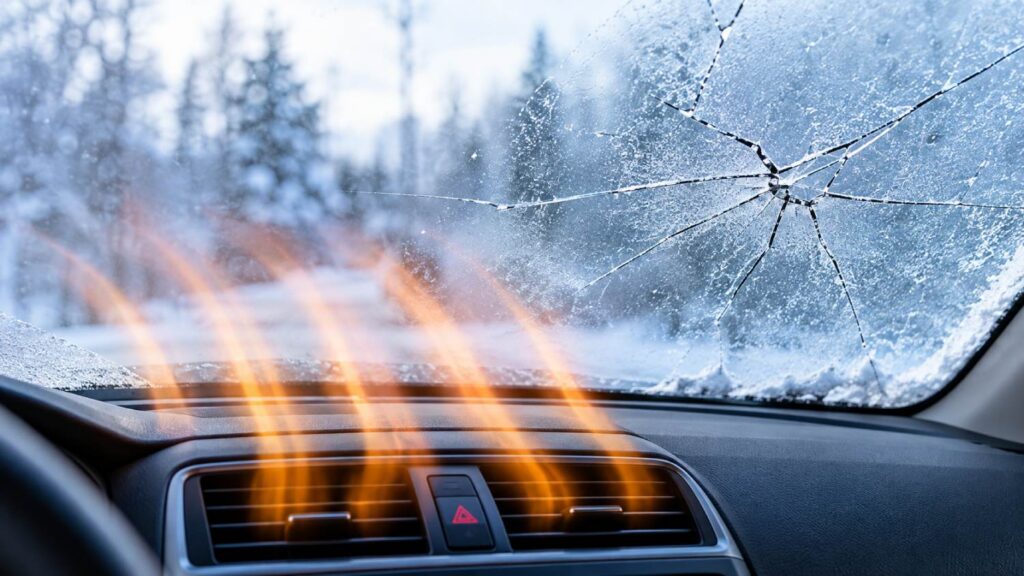
A: Yes, and it’s more common in New England than elsewhere due to temperature swings. A chip that was dormant for months can spread overnight when temperatures drop sharply or when a warm car is exposed to cold air. Once a crack starts spreading, it typically won’t stop on its own.
Q: Does it matter what brand of glass is used in a replacement?
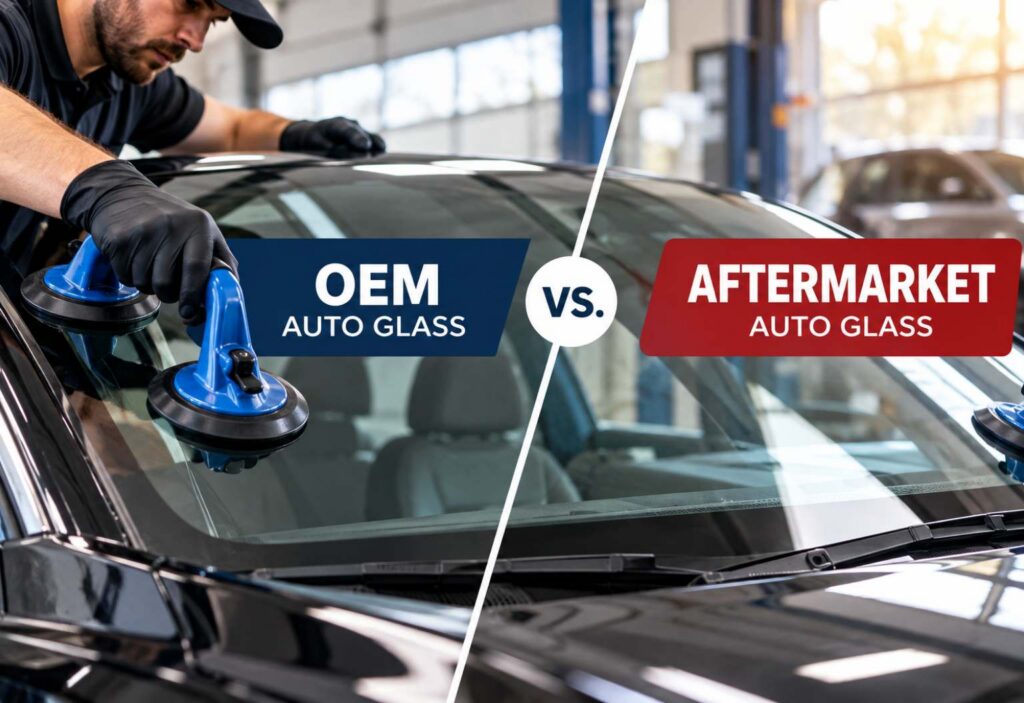
A: It can. OEM (Original Equipment Manufacturer) glass is made to the exact specifications of the original windshield. OEE (Original Equipment Equivalent) glass meets the same safety standards as original equipment glass but is manufactured by a third party. Both are acceptable for most vehicles. However, for vehicles with ADAS features, OEM glass is often recommended to ensure the camera and sensor systems function correctly after recalibration.
Q: What if I filed a claim and my insurance company wants to send their own technician?
A: In most states, including Massachusetts, you have the right to choose your own auto glass provider regardless of what your insurance company suggests. Insurers may have preferred vendors, but you are not obligated to use them. Choose a provider you trust, and confirm they are familiar with your vehicle’s specific requirements.
References: Auto Glass Safety Council — agsc.org | National Windshield Repair Association — nwra.net | Insurance Institute for Highway Safety — iihs.org | Massachusetts General Law Ch. 175, Sec. 113H — malegislature.gov