Summer is supposed to be the easy season for your car. No ice, no salt spray, no frozen door handles. A lot of New England drivers mentally file auto glass under ‘winter worries’ and don’t think about it again until November. That’s a mistake — and it’s one that costs people real money every July and August.
The truth is that summer brings its own set of windshield threats, and some of them are more damaging than anything winter throws at you. From thermal stress on existing chips to high-speed highway debris to UV degradation of the rubber seals that hold your glass in place, warm weather quietly does a number on your windshield. Here’s what you need to know.
Heat Makes Small Chips Bigger — Fast
Glass expands when it heats up and contracts when it cools down. On a typical summer day in Connecticut or Massachusetts, your car’s interior can reach temperatures of 130°F to 170°F when parked in direct sunlight, according to research published by the National Highway Traffic Safety Administration (NHTSA). Your windshield — a large, dark-framed pane of glass facing the sun — absorbs and radiates a significant portion of that heat.
If you have a chip or small crack already, that thermal expansion and contraction acts like a lever working against the glass. The crack edges push apart when the glass heats up and pull together when it cools. Over time — sometimes over just a few days of hot weather — a chip that was repairable becomes a crack that runs halfway across the windshield.
The Auto Glass Safety Council (AGSC) considers chips smaller than a dollar bill and cracks shorter than three inches as candidates for repair rather than full windshield replacement — but only when the damage is addressed promptly. Heat accelerates the timeline dramatically. A chip you meant to deal with ‘next week’ in July may be irreparable by the time next week arrives.
The practical upshot: if you notice a chip or crack at any point during the summer, treat it as urgent. Chip repair is fast, inexpensive, and often covered at zero cost under Connecticut’s mandatory zero-deductible glass law.
Highway Season Means More Debris Strikes
Summer driving in New England looks different than winter driving. More road trips. More highway miles. More time on I-95 between New Haven and Providence, on Route 6 heading toward the Cape, on I-91 up through the Connecticut River Valley. That’s more time behind trucks kicking up gravel, more time in construction zones where loose aggregate is everywhere, and more time at highway speed when even a small rock becomes a projectile with real force.
According to the Insurance Information Institute, flying debris and road hazards are among the most common causes of windshield damage. The higher your speed when a rock strikes, the more kinetic energy is transferred to the glass — which is why highway impacts tend to produce more dramatic damage than the same rock at city speed.
There’s not much you can do to eliminate the risk entirely, but there are smart habits that help. Keep a safe following distance from large trucks — at least four seconds of space at highway speeds. If you’re driving through a construction zone, slow down and increase your following distance further. And if you do take a strike, pull over when safe to assess the damage before heat and vibration have a chance to spread it.
UV Exposure and Seal Degradation
Your windshield doesn’t fail in isolation. It’s held in place by a urethane adhesive and surrounded by rubber gaskets and trim that form a weatherproof seal. Those seals are vulnerable to prolonged UV exposure in ways that the glass itself is not.
Extended sun exposure causes rubber to dry out, crack, and shrink. When windshield seals degrade, they can allow water infiltration during rain, increase road noise, and in more severe cases, compromise the structural integrity of the glass installation. The National Windshield Repair Association (NWRA) recommends periodic visual inspection of windshield edges, particularly in vehicles that spend significant time parked outdoors in summer sun.
What to look for: any visible cracking or separation in the black rubber trim around the windshield perimeter, water staining or fog inside the car near the glass edges after rain, or a whistling wind noise at highway speed that wasn’t there before. Any of these can indicate seal wear that deserves attention.
The Defroster Mistake People Make in Summer
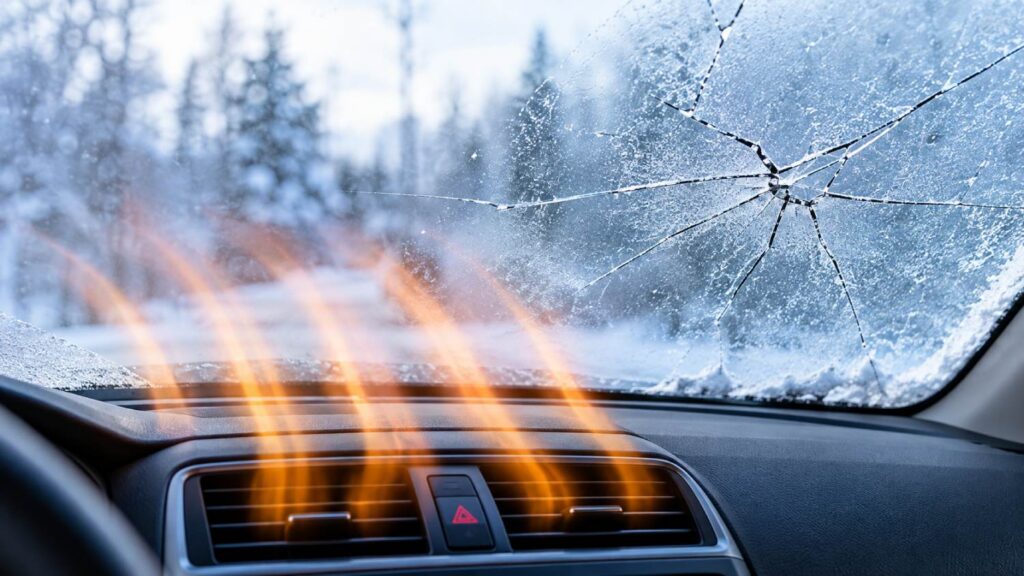
Here’s a scenario that plays out thousands of times every summer: you get into a car that’s been sitting in the sun all afternoon, the interior is sweltering, and you crank the air conditioning to full blast. The cold air hits the hot glass. And if there’s any pre-existing damage — even a micro-crack you hadn’t noticed — that thermal shock can turn it into a visible problem in seconds.
The same dynamic applies in reverse when you use the rear defroster on a cool summer morning. Rapid temperature changes are always stressful for/services/windshield-repair/ glass. If you’ve been parking in the sun all day and notice the interior is very hot, let the car cool for a minute or two before blasting the AC directly at the glass. It’s a small habit that can prevent a large inconvenience.
Road Trip Checklist: Inspect Before You Go
Summer road trips are a New England tradition — Acadia, the Berkshires, Block Island, Cape Cod. Before you load up the car and head out, make a windshield inspection part of your pre-trip routine. A crack or chip that’s manageable at home becomes a real problem if it spiders across your windshield on the Pike at 70 miles per hour.
Here’s what to check before any long drive:
- Walk around the car and look at the windshield from multiple angles in natural light — chips and micro-cracks are much easier to spot from the side than head-on.
- Check the edges of the glass, where damage often starts unseen and spreads inward.
- Inspect the rubber trim around the windshield for cracking or separation.
- Test your wipers — worn blades can scratch the glass and impair visibility in sudden summer rainstorms.
- If you find damage, get it assessed before the trip, not after. Most chip repairs take under 30 minutes.
Payless Auto Glass: Ready for Summer Across Connecticut, Rhode Island, and Massachusetts
Whether you’ve picked up a highway chip on I-95 or noticed a spreading crack after a hot week, the team at Payless Auto Glass is ready to help. We offer fast chip repairs and full windshield replacements at seven locations across Connecticut, Rhode Island, and Massachusetts — plus mobile service so we can come to you.
Connecticut drivers with comprehensive insurance can often have their windshields repaired or replaced at zero cost under the state’s mandatory zero-deductible glass law. Call us for a free quote: 877-776-4527. Don’t let summer heat turn a small chip into a replacement job.
Frequently Asked Questions
Q: Can a chipped windshield shatter in summer heat?
A: Full spontaneous shattering is rare with modern laminated windshield glass, which is designed to crack rather than shatter. But heat can cause an existing chip or crack to spread rapidly — sometimes in a matter of hours on a very hot day. A compromised windshield is also more likely to fail structurally in a collision. Address chips promptly.
Q: How hot does a parked car get in New England summer weather?
A: Interior temperatures in a parked car can exceed 130°F on an 80°F day in direct sunlight. The dashboard and glass surfaces closest to the sun can reach temperatures significantly higher than the ambient air inside the cabin. This level of heat creates meaningful thermal stress on any existing glass damage.
Q: Is chip repair permanent?
A: A properly performed chip repair fills the damaged area with a clear resin that bonds to the glass and prevents the crack from spreading. The repair is structural, not cosmetic — it restores the integrity of the glass. The chip may still be faintly visible, but the repair prevents further damage. Most quality repairs carry a warranty.
Q: My windshield cracked from the heat, but I didn’t hit anything. Does insurance cover that?
A: Thermal cracking that occurs without an impact is a gray area with some insurers. Connecticut’s zero-deductible glass law covers glass damage under comprehensive claims — thermal cracking can qualify, but the circumstances matter. Contact your insurer and describe what happened; the shop you choose can also help document the claim properly.
Q: How long does a windshield chip repair take?
A: Most chip repairs take 20 to 45 minutes from start to drive-away. There’s no curing wait required, the way there is with full replacement. It’s genuinely one of the quickest automotive repairs you can get done.
Q: My car has a rain sensor built into the windshield. Does that affect replacement?
A: Yes — rain sensors, heated windshields, and other embedded technology need to be properly transferred or accounted for during replacement. A qualified shop will know which components need to be reinstalled and whether any recalibration is required after the new glass is set. Always confirm this with your shop before work begins.
Sources: NHTSA Vehicle Safety Research | Auto Glass Safety Council | Insurance Information Institute | National Windshield Repair Association