A New England Driver’s Guide to Seasonal Auto Glass Care
If you’ve lived in New England long enough, you know that winter doesn’t leave quietly. It lingers — in the frost-heaved roads, the salt-caked underbodies of your car, and yes, in the damage it quietly inflicts on your windshield. By the time April rolls around in Massachusetts, Connecticut, Rhode Island, or Maine, your auto glass has already been through a lot: sub-zero temperature swings, ice scraper sessions, highway slush, and road salt that seems to get into everything.
Spring is actually one of the most important times of year to take a close look at your windshield. What seemed like a minor chip in January could now be a crack working its way across your line of sight. And with pothole season in full swing across New England — a seasonal tradition as reliable as mud season itself — new damage can appear without warning.
This guide walks you through what spring does to your auto glass, what warning signs to watch for, and when it’s time to call a professional.
Why Winter Is So Hard on Windshields
To understand spring damage, you have to understand what came before it. New England winters create a perfect storm of conditions that stress auto glass in multiple ways.
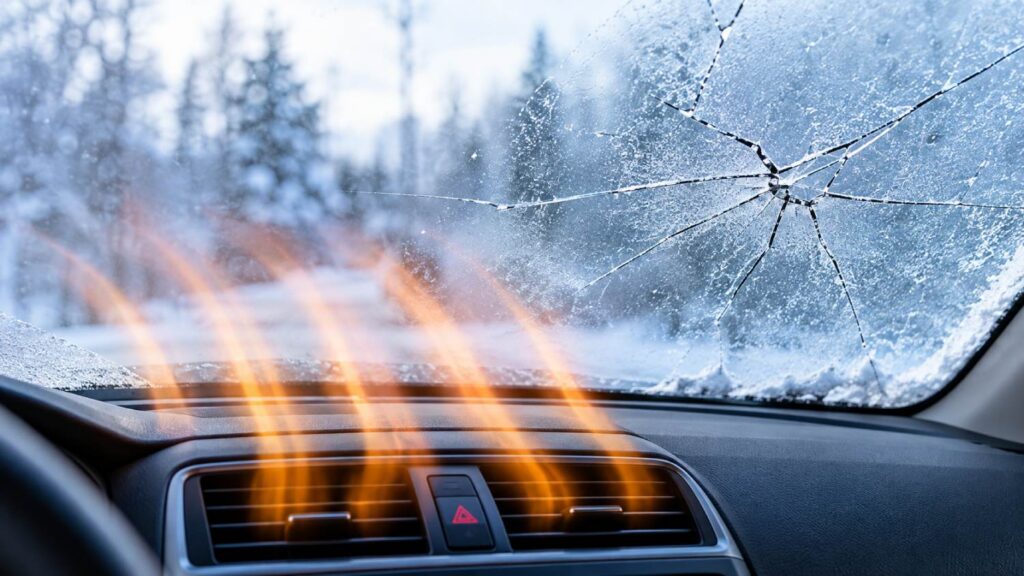
Temperature cycling is one of the biggest culprits. When glass contracts in extreme cold and then expands rapidly — say, when you blast the defroster on a 10-degree morning — existing chips and micro-fractures are forced to spread. According to the Auto Glass Safety Council (AGSC), temperature differentials of just 20–30°F applied suddenly can cause a small chip to crack across the entire windshield.
Road salt compounds the problem. While salt is essential for keeping New England roads drivable between November and March, it’s corrosive. Salt and sand mixtures thrown up from the road surface act like fine sandblasting on your windshield, gradually pitting the glass and weakening its structural integrity over time.
Then there’s ice scraping. Even careful drivers occasionally apply too much pressure, especially on those rushed weekday mornings. Metal scrapers in particular can leave micro-scratches that reduce visibility and create nucleation points where cracks can start.
Spring Potholes: A New England Rite of Passage
Every spring, New England roads go through what civil engineers call the freeze-thaw cycle. Water seeps into cracks in the pavement, freezes and expands, then thaws — leaving behind voids that collapse under traffic and form potholes. The American Automobile Association (AAA) estimates that pothole damage costs U.S. drivers approximately $3 billion per year in vehicle repairs, with northeastern states consistently ranking among the worst affected.
When you hit a pothole, the impact sends a shockwave through your vehicle’s frame. If there’s already a small chip or stress fracture in your windshield, that vibration can be enough to propagate it into a full crack. Gravel and road debris also become more common in spring as snow plows have loosened pavement edges, turning your daily commute into something of a rock quarry.
The practical takeaway: if you’ve been hitting potholes on your commute through Hartford, Providence, or Worcester this spring, it’s worth giving your windshield a thorough inspection — even if nothing looked obviously wrong after the fact.
Signs Your Windshield Needs Attention This Spring
Not all windshield damage is obvious. Some of the most serious issues develop slowly and can be easy to overlook until they’ve become much harder — and more expensive — to address. Here’s what to look for:
- Chips or dings smaller than a quarter: These are often repairable if addressed promptly. Left alone through another season, they almost always become cracks.
- Cracks longer than 6 inches: Most technicians will recommend replacement at this stage rather than repair, especially if the crack is in the driver’s line of sight.
- Edge cracks: Cracks that originate near the edge of the windshield are structurally concerning and can compromise the glass’s ability to support the roof in a rollover accident.
- Pitting or haze across the glass: This is often the result of sand and salt abrasion over multiple winters. It scatters light, which becomes especially problematic at sunrise and sunset — both common commuting times.
- Delamination around the edges: The black ceramic frit band around the perimeter of your windshield seals it to the frame. If you notice bubbling or separation there, moisture may have worked its way in.
A good habit is to do a dedicated windshield inspection on a bright morning, ideally with the sun low in the sky. Angle-specific lighting will reveal chips, scratches, and surface haze that might not be visible head-on.
Repair vs. Replacement: How to Know Which You Need
The decision between repair and replacement isn’t always straightforward, but there are some reliable guidelines. The AGSC and most industry professionals use a few key factors: the size of the damage, its location on the glass, and its depth.
Repairs are generally viable for chips smaller than a dollar coin and cracks shorter than 6 inches that are not in the driver’s primary line of sight and not in the corner of the windshield. A technician injects a clear resin into the damaged area, which bonds with the glass and prevents the crack from spreading. When done properly, the repair is structurally sound, though a faint mark may still be visible.
Replacement becomes necessary when cracks are too long, when damage is directly in the driver’s sightline (typically the area swept by the wipers), or when the inner laminate layer of the glass has been compromised. Modern windshields are laminated safety glass — two layers of tempered glass bonded by a polyvinyl butyral (PVB) interlayer — and once that inner layer is damaged, the windshield can no longer perform its safety function reliably.
One important note for newer vehicles: if your car is equipped with advanced driver assistance systems (ADAS) — features like lane departure warning, automatic emergency braking, or adaptive cruise control — the camera or sensor mounted near the rearview mirror may need to be recalibrated after any windshield replacement. Skipping this step can result in those safety systems operating incorrectly, which is a serious concern. We’ll cover this in more detail in a separate article.
Spring Windshield Care: Practical Tips
Beyond getting damage repaired, there are some straightforward steps you can take this spring to protect your auto glass going forward.
- Replace your wiper blades: Winter is brutal on wiper rubber. Streaky, chattering blades don’t just reduce visibility — they can actually scratch glass if the rubber deteriorates enough to expose the metal frame. Spring is the right time for a fresh set.
- Clean your windshield properly: Skip the paper towels and household glass cleaner. Use a proper automotive glass cleaner and a microfiber cloth. Pay attention to the inside of the glass too — film buildup on the interior surface significantly increases glare.
- Check your washer fluid reservoir: Refill with a warm-weather formulation. Winter blends contain antifreeze agents that aren’t necessary in spring and summer, and some can leave residue.
- Give your car a thorough wash: The salt and road grime that accumulated over winter doesn’t just affect the body of your vehicle — it works its way into seals and trim around your windshield. A good undercarriage wash and a careful cleaning around the glass perimeter helps prevent long-term corrosion.
- Park in shade when you can: UV exposure degrades wiper blades faster and can affect windshield adhesives over time. Wherever possible, shaded or covered parking extends the life of your glass and its components.
About Payless Auto Glass
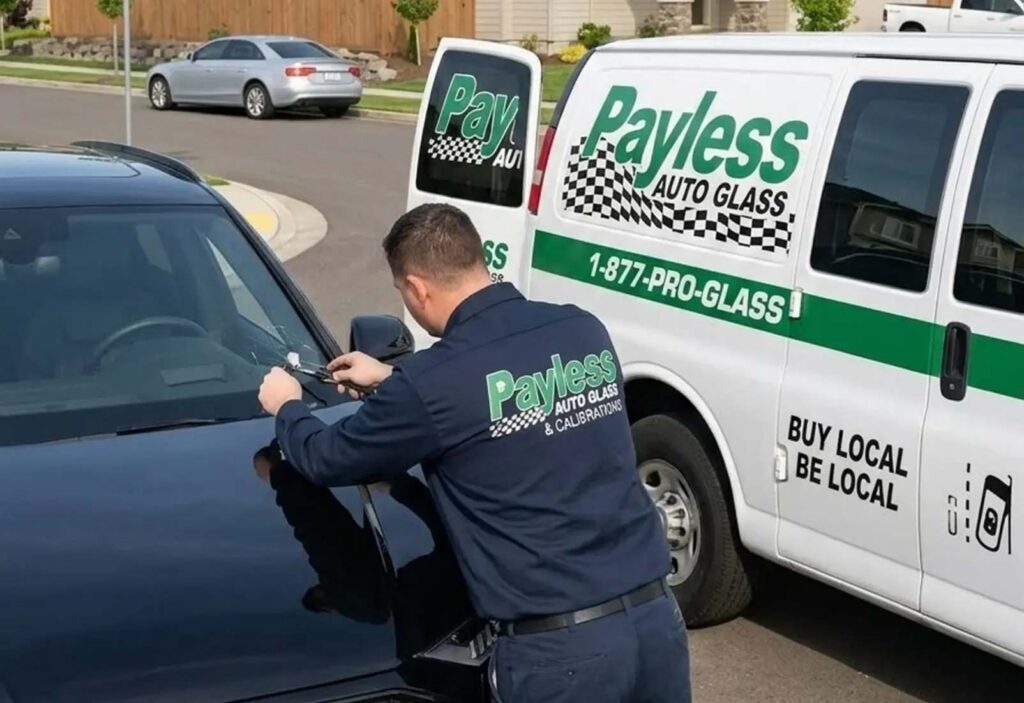
Payless Auto Glass has been serving drivers across New England with reliable, affordable auto glass repair and replacement services. Whether you’re dealing with a small chip from a spring pothole, a crack that developed over the winter, or a full windshield replacement on a newer vehicle with ADAS features, the team at Payless Auto Glass brings the expertise to get it done right.
Payless Auto Glass works with most major insurance providers and can help you navigate the claims process — in many states, including Massachusetts and Connecticut, comprehensive auto insurance covers windshield repair with no deductible. Mobile service is available, meaning a technician can come to your home, office, or wherever your car is parked.
Don’t wait for a chip to become a crack. Contact Payless Auto Glass today for a free assessment and get your vehicle ready for spring.
Frequently Asked Questions
Q: Can a windshield crack really spread just from temperature changes?
A: Yes, and it happens more often than people expect. Glass expands and contracts with temperature. If there’s already a chip or stress fracture, a sudden thermal shift — like blasting your defroster on a cold morning — creates uneven stress that causes the crack to propagate. In New England, where temperature swings of 40°F or more in a single day aren’t unusual in the spring, this is a real and common risk.
Q: My chip is tiny. Does it really need to be fixed?
A: Almost certainly yes, and sooner rather than later. A chip that’s small today is much easier and cheaper to repair than a crack that spans your windshield a month from now. Most repairs take less than an hour and cost a fraction of a full replacement — and many insurance policies cover them at no cost to you.
Q: How long does a windshield replacement take?
A: Most standard replacements take between one and two hours. However, you’ll typically need to wait an additional hour or more for the adhesive to cure before the vehicle is safe to drive. Your technician will give you a specific safe drive-away time based on the adhesive used and the temperature.
Q: Will my insurance cover my windshield repair or replacement?
A: It depends on your policy. In Massachusetts, Connecticut, and several other New England states, comprehensive auto insurance typically covers windshield repair — sometimes with no deductible at all. Replacement coverage varies by policy. The team at Payless Auto Glass can help you understand what your insurance covers and handle the claim on your behalf.
Q: What is ADAS recalibration and do I need it?
A: ADAS stands for Advanced Driver Assistance Systems — the suite of safety technologies in many modern vehicles that includes features like lane-keep assist, automatic emergency braking, and forward collision warning. Many of these systems rely on a camera mounted near the rearview mirror, right behind the windshield. When the windshield is replaced, that camera needs to be recalibrated to ensure the system is reading the road accurately. If your vehicle has these features, recalibration is not optional — skipping it can cause those safety systems to malfunction. Payless Auto Glass offers ADAS recalibration services as part of the replacement process.
Q: Is mobile auto glass service as reliable as going to a shop?
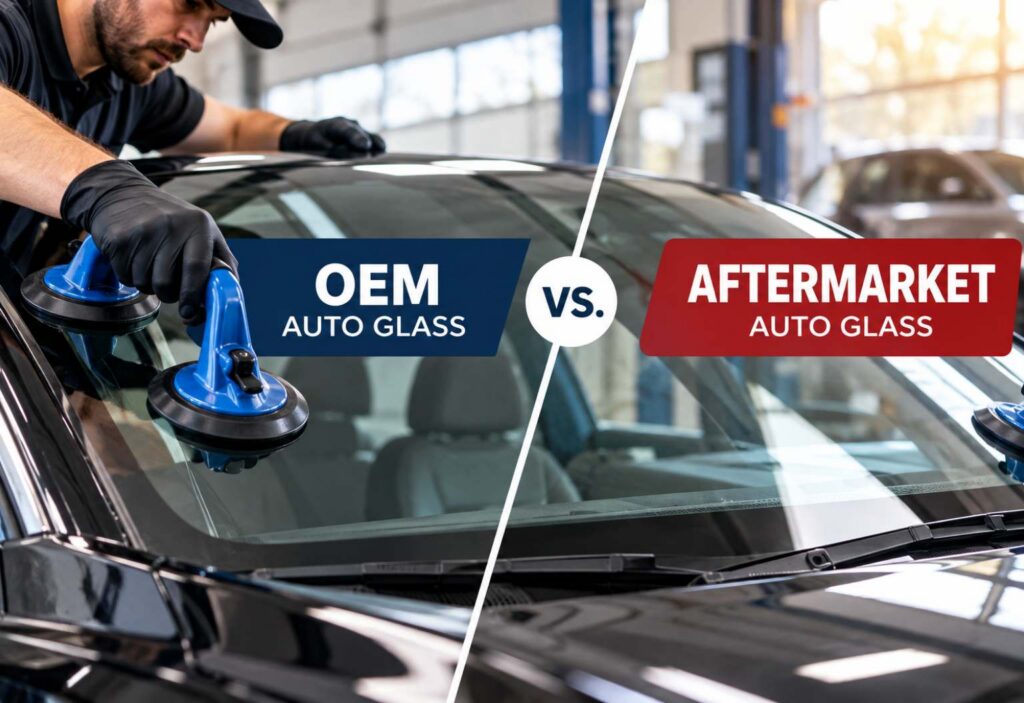
A: When performed by a qualified technician using quality materials, yes. The same OEM-equivalent glass and adhesives used in a shop can be used on-site. The main consideration is weather — mobile replacements should not be performed in rain or extreme cold, as these conditions can affect adhesive curing. Payless Auto Glass will work with you to schedule mobile service at a time and location where conditions are appropriate.
Sources: Auto Glass Safety Council (AGSC) — agsc.org; American Automobile Association (AAA) — aaa.com/pothole; Insurance Institute for Highway Safety (IIHS) — iihs.org