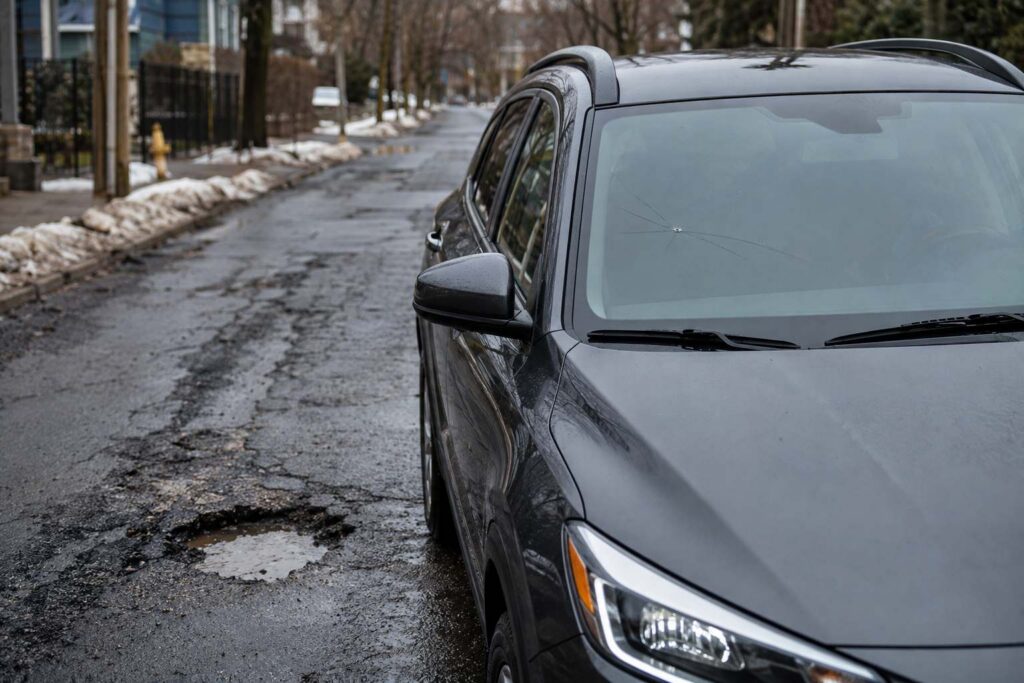
If you’ve had a windshield replaced on a vehicle made in the last several years, there’s a good chance your technician mentioned a word you may not have heard before installing your car: calibration. It’s not an upsell. For most modern vehicles, it’s the difference between a windshield that looks fine and one that actually keeps your safety systems working as the manufacturer intended.
At Payless Auto Glass, we replace and calibrate windshields every day across Connecticut, Massachusetts, and Rhode Island, including right here in Hartford. We’ve seen firsthand how many drivers are surprised to learn that a new piece of glass can quietly disable a camera-based safety feature if it isn’t recalibrated correctly. This guide explains what ADAS calibration is, why it matters, and how to know if your vehicle needs it.
What Is ADAS, and Why Does It Live on Your Windshield?
ADAS stands for Advanced Driver Assistance Systems — the collection of technologies that includes forward collision warning, automatic emergency braking, lane departure warning, adaptive cruise control, and pedestrian detection. According to the National Highway Traffic Safety Administration, these systems are now standard on the vast majority of new vehicles sold in the U.S., and automatic emergency braking became a required feature on new light vehicles under a recent federal rule.
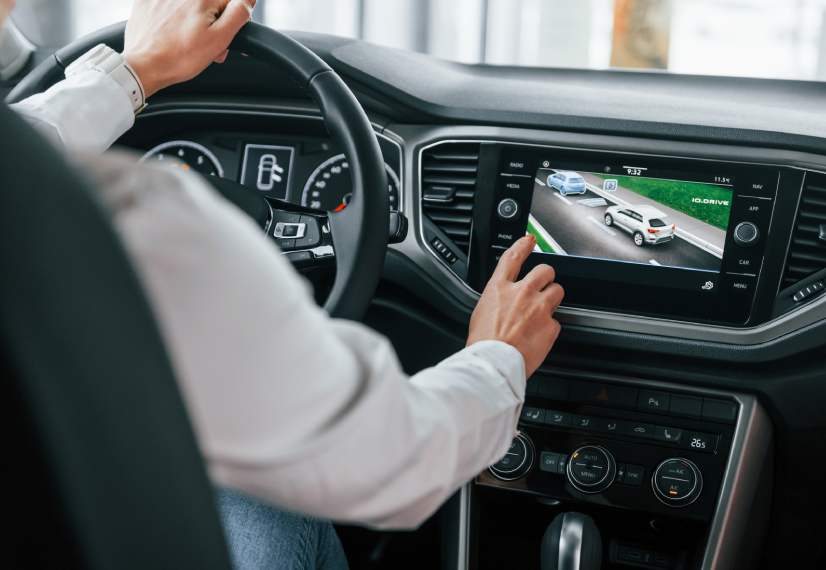
Many of these systems rely on a forward-facing camera mounted directly behind your windshield, near the rearview mirror. That camera is calibrated to “see” the road from an exact position, angle, and distance. When your windshield is removed and replaced, even a fraction of a millimeter of difference in glass thickness, curvature, or mounting position can throw that camera’s calibration off. The Insurance Institute for Highway Safety has published research showing how sensitive these systems are to precise alignment, which is exactly why recalibration isn’t optional guesswork — it’s a documented, testable procedure.
Static vs. Dynamic Calibration
There are two main approaches to ADAS calibration, and which one your vehicle needs depends on the manufacturer’s specifications:
- Static calibration is performed in a controlled shop environment using targets, measured distances, and diagnostic equipment while the vehicle is stationary. This is common for many Honda, Toyota, and Subaru models.
- Dynamic calibration requires driving the vehicle at a specific speed, on roads with clear lane markings, for a set period of time while a scan tool monitors the camera’s recalibration in real time.
- Some vehicles require both — a static calibration followed by a dynamic drive cycle to confirm everything is functioning correctly.
This is one reason mobile windshield replacement isn’t always the end of the job. If your vehicle requires static calibration with shop equipment, our team will let you know upfront whether that step needs to happen at one of our service centers, even if the glass itself was installed at your home or office through our mobile auto glass service.
Why Skipping Calibration Is a Real Risk, Not Just a Formality
It’s tempting to think that if the car “feels normal,” the camera must be fine. In practice, a misaligned system can behave in subtle but dangerous ways: a lane departure warning that fires late or not at all, adaptive cruise control that misjudges the distance to the car ahead, or automatic emergency braking that doesn’t engage in time. These systems only add value if they’re seeing the road accurately, and a shop that reinstalls glass without checking or performing calibration has no way to confirm that’s the case.
This is also a liability issue. If a calibration-dependent system fails to perform after an uncalibrated windshield replacement, the shop that skipped the step — not just the manufacturer — can be held responsible. That’s part of why the Auto Glass Safety Council developed the ANSI/AGRSS safety standard, which sets documented procedures for glass replacement and calibration that reputable shops are expected to follow.
How Payless Auto Glass Handles Calibration
Every windshield we install that requires calibration goes through a documented process using OEM-specified procedures and calibration equipment, not guesswork. Here’s what that looks like in practice:
- We identify the ADAS features on your specific make and model before the job starts, so there are no surprises.
- We perform static and/or dynamic calibration in accordance with the manufacturer’s requirements.
- We verify the calibration with diagnostic scan results, so you have confirmation the system is reading correctly—not just an assumption.
- We back the work with our windshield warranty, which covers your installation against leaks and stress cracks for as long as you own the vehicle.
You can read more about the specifics of this process on our ADAS Calibration service page, and see how it pairs with a full windshield replacement from start to finish.
Does Insurance Cover Calibration?
In most cases, yes. Insurers increasingly recognize calibration as a required part of a proper windshield replacement rather than an optional add-on, and many Connecticut policies include glass coverage that accounts for it. Our team works directly with the major auto insurance carriers to handle the paperwork and file the claim on your behalf, so you’re not stuck deciphering it yourself. You can learn more on our auto insurance glass coverage page, and if cost is a concern even after insurance, we also offer financing options for Hartford, CT customers.
Questions to Ask Any Shop Before You Book
Whether you choose Payless Auto Glass or another provider, these questions can help you avoid an incomplete repair:
- Does my vehicle require static calibration, dynamic calibration, or both?
- Will calibration take place on the same day as the glass replacement, or does it require a separate appointment?
- Can I get documentation showing the calibration was completed and verified?
- Does my insurance cover the calibration, and will you help file that claim?
A shop that can answer these clearly and specifically for your vehicle — not with a generic “don’t worry about it” — is one that understands the difference between replacing glass and restoring your car’s full safety functionality.
Common Calibration Questions We Hear from Hartford Drivers
“My old windshield never needed calibration — why does the new one?” Often it’s because the vehicle is newer than drivers realize, or because a previous shop replaced the glass without mentioning calibration at all. If your car has adaptive cruise control, lane-keep assist, or automatic emergency braking, there’s a strong chance it has a forward-facing camera that needs to be checked any time the windshield is removed.
“Can I just drive around and let the system recalibrate itself?” For vehicles that only require dynamic calibration, driving does play a role — but it must occur under specific, controlled conditions (clear lane markings, a set speed range, and monitoring by a scan tool) to count as a verified calibration. Casual daily driving isn’t a substitute, and no dashboard light reliably confirms the camera is reading correctly on its own.
“How long does calibration add to my appointment?” It varies by vehicle and calibration type, but static calibration typically adds roughly 30 minutes to an hour. At the same time, a dynamic drive cycle can take a bit longer depending on road conditions. We’ll give you a specific estimate once we know your make, model, and trim.
Get Your Windshield Replaced and Calibrated Correctly in Hartford
If you’re due for a windshield replacement in the Hartford area, our team at 305 West Service Rd is equipped to handle both the glass and the calibration your vehicle needs, backed by a lifetime installation warranty and three years running as Hartford Magazine’s top-voted auto glass company. You can request an instant quote, browse customer reviews, or check our FAQs for more detail on how we work with insurance.
Ready to get started? Contact Payless Auto Glass or call us directly at 877-776-4527 to schedule your windshield replacement and calibration — mobile or in-shop, whichever fits your day.